

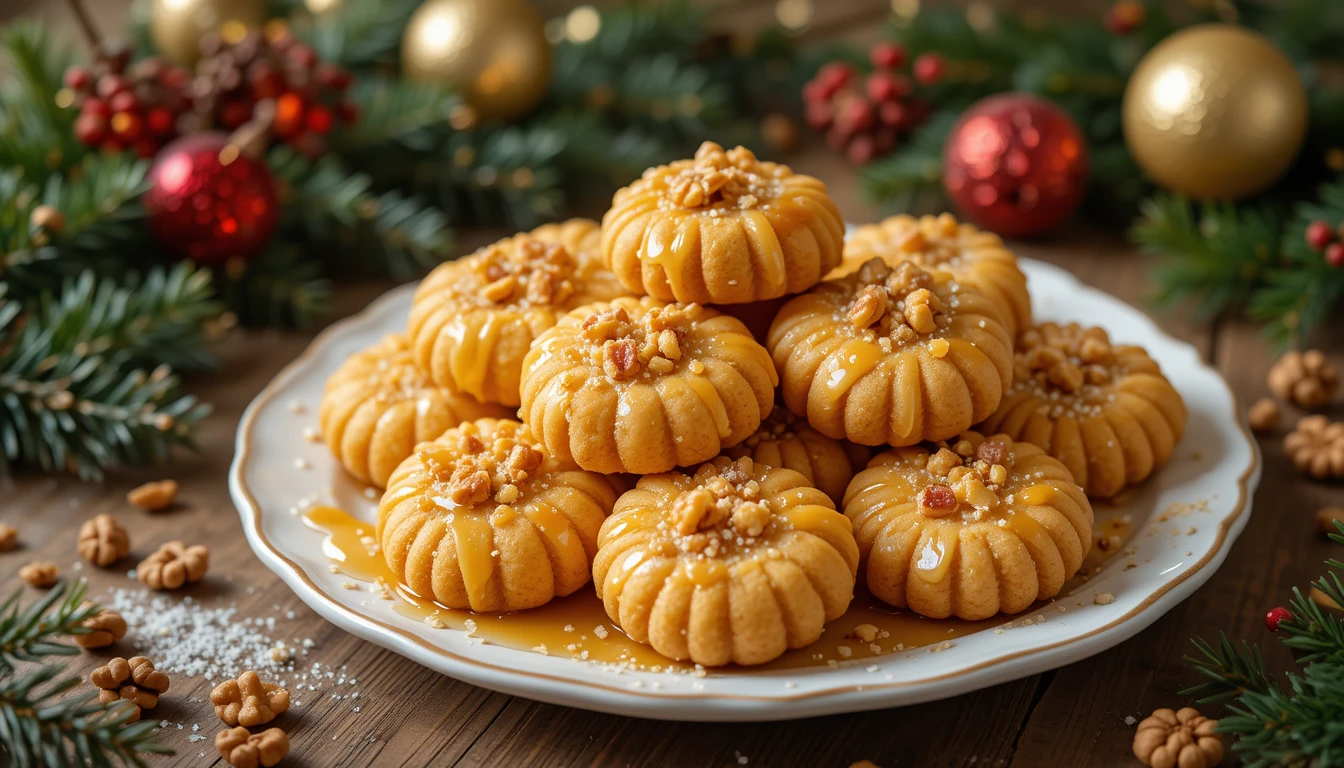
Imagine the secret to the most delicious Christmas Greek Honey Cookies is in Greece. Welcome to the world of melomakarona, the beloved honey-sweetened treats. They’ve been a cherished part of Greek holiday traditions for generations. These soft, fragrant cookies are infused with cinnamon, cloves, and orange. They’re a true taste of the Mediterranean and will soon become your holiday favorite.
Key Takeaways
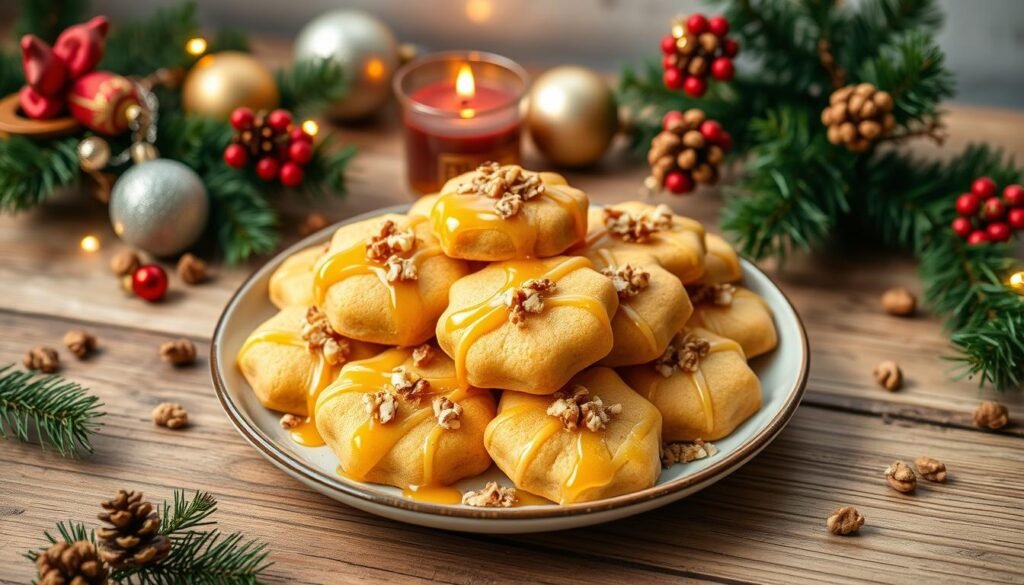
- Melomakarona are traditional Greek Christmas cookies made with flour, olive oil, sugar, and orange juice
- These vegan treats are known for their soft, moist texture and intense aroma of spices like cloves, cinnamon, and nutmeg
- A traditional recipe yields about 50 cookies, making them perfect for sharing during the holiday season
- Melomakarona are a beloved part of Greek Christmas traditions, embodying the essence of the Mediterranean
- The cookies are typically baked for 15-20 minutes at 180°C/356°F and then drenched in a honey syrup
Understanding Melomakarona: A Greek Christmas Tradition
In the rich tapestry of Greek culinary culture, traditional Greek sweets hold a cherished place. Melomakarona, these honey-soaked cookies, shine brightly during Christmas in Greece. They have deep roots in Greek heritage, woven into the fabric of holiday celebrations.
Origins and Cultural Significance
Melomakarona trace their origins back to the Byzantine Empire, which flourished between AD 300 to 1400. These vegan cookies were initially served as Lenten treats, lacking dairy and eggs. Over time, they became a key part of Greek holiday treats during Christmas, alongside kourabiedes and vasilopita.
The Etymology of Melomakarona
The name “melomakarona” reflects their cultural significance. It comes from “meli” (honey) and “makaria,” meaning “blessed.” This name shows the Greek people’s reverence and appreciation for these sweets.
Traditional Holiday Timing
Melomakarona are deeply tied to Greek culinary culture and are traditionally served during Christmas. Their appearance on tables and in bakeries signals the start of holiday festivities. It’s a time of joy, celebration, and the rich traditions that make Christmas in Greece special.
“Melomakarona are not just a dessert; they are a symbol of the warmth and togetherness that defines the Greek Christmas experience.”
Essential Ingredients for Greek Honey Cookies
Making authentic Greek honey cookies, known as melomakarona, starts with the right ingredients. These treats are a mix of sweetness and spice, loved by many. They are a true delight.
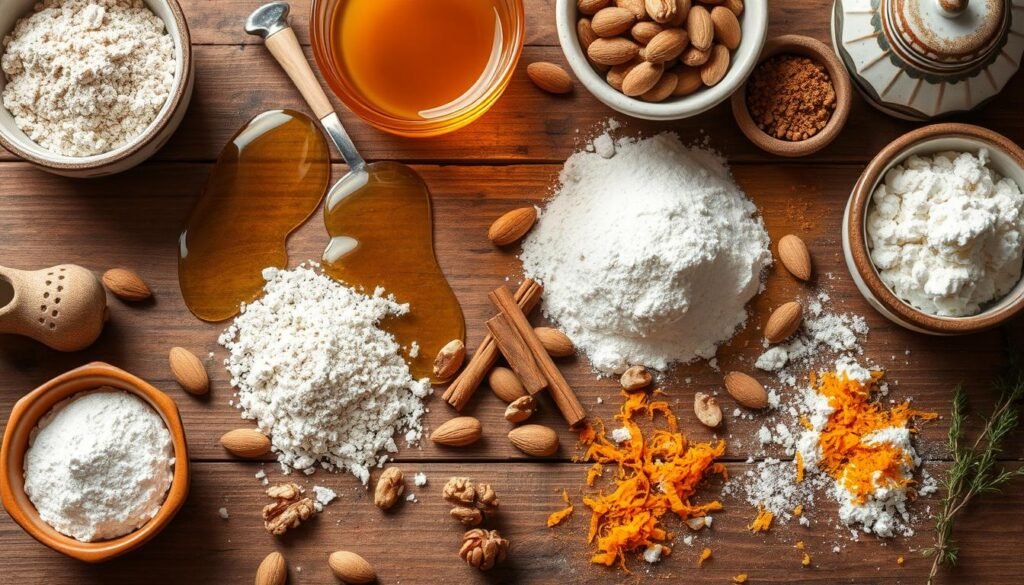
The recipe centers on all-purpose flour and semolina. This mix makes the cookies moist and juicy. High-quality olive oil is key. It adds a fruity flavor and a tender crumb.
Orange juice and zest bring citrus notes. A bit of cognac or brandy adds warmth and depth. The sweetness comes from sugar, cinnamon, nutmeg, and cloves. Together, they create a perfect flavor balance.
Baking soda and vanilla extract help the dough come together. They make the cookies soft and delicious. The cookies are then dipped in a honey syrup. This syrup adds a honey-infused taste that’s irresistible.
With these ingredients, bakers can make authentic Greek olive oil cookies. They can enjoy the Mediterranean baking tradition.
“The secret to perfect melomakarona lies in the careful selection and balance of each ingredient, creating a harmonious symphony of flavors that transports you to the heart of Greece.”
The Art of Making Perfect Melomakarona
Making the perfect Greek honey cookies, or melomakarona, is an art. It needs careful techniques and attention to detail. To get that soft, melt-in-your-mouth feel, focus on the dough and baking. Let’s explore the secrets to making perfect melomakarona.
Dough Preparation Techniques
To make a great melomakarona dough, don’t overwork it. This can cause oil to separate. Mix the dry ingredients like flour, semolina, baking powder, and spices gently. For the wet ingredients, use oil, sugar, vanilla, orange juice, and baking soda. Mix these with care to get a soft, shiny dough.
Shaping and Forming Methods
When the dough is ready, shape the melomakarona into their unique oval shapes. Use a grater to add texture to the cookies. This makes them look great and helps them soak up honey syrup better.
Baking Temperature and Timing
Getting the baking just right is key for melomakarona. Bake them at 180°C (356°F) for about 25 minutes, until they’re golden. Don’t add extra flour, as it makes them tough. Keep the dough soft and shiny while baking. This ensures they soak up the honey syrup perfectly, making them a delicious Greek treat.
“The secret to perfect melomakarona lies in the delicate balance of the dough and the precision of the baking process. It’s a true art form that has been passed down through generations in Greece.”
The Secret of the Honey Syrup Bath
The taste of Greek honey cookies, or melomakarona, comes from the honey syrup bath. This syrup is key to their flavor. It adds a delicious, aromatic touch to the cookies.
To make this syrup, honey, sugar, water, and sometimes citrus zest are mixed. It cools down completely before the next step.
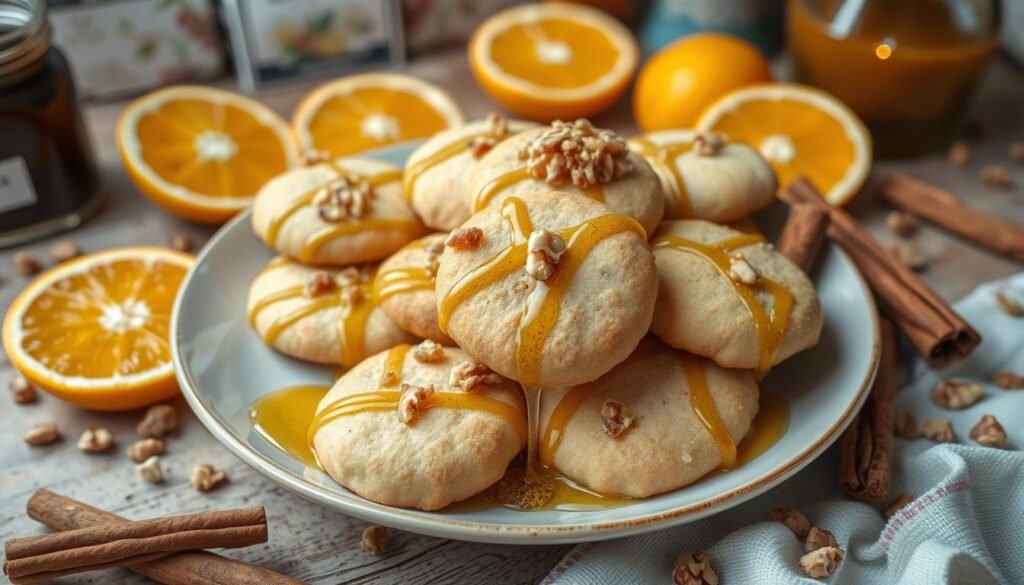
After baking, the cookies are dipped in the syrup. They soak for about 20 seconds. This makes them moist and honey-soaked. It’s the secret to their unique taste.
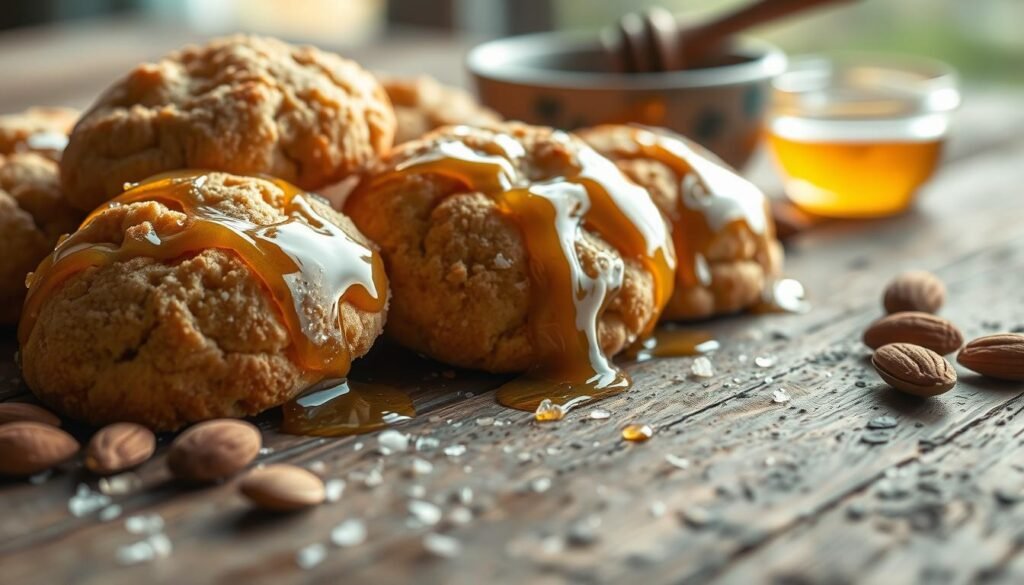
“The honey syrup bath is the key to unlocking the true essence of traditional melomakarona. It’s a time-honored technique that transforms these cookies into a delightful, honey-infused delight.”
Learning to soak the cookies in honey syrup is crucial. It makes each melomakarona a delicious, honey-soaked treat. It shows Greece’s rich culinary heritage.
Walnut Topping and Traditional Garnishes
The walnut topping makes Greek walnut cookies, or melomakarona, truly special. To make this tasty garnish, finely chop a lot of walnuts. Then mix them with cinnamon and a bit of ground cloves. Sprinkle this nut mix over the honey-soaked cookies right after they soak in the syrup.
While walnuts are the usual choice, some regional Greek confections might use pistachios or other nuts. The topping adds a nice crunch and matches the sweet honey flavor of the cookies perfectly.
Preparing the Nut Mixture
To make the walnut topping, you’ll need:
- 1 1/2 cups of finely chopped walnuts
- 1 tablespoon of ground cinnamon
- 1/2 tablespoon of ground cloves
Put all the ingredients in a bowl and mix until they’re well combined. The chopped nuts should be even, ready to be sprinkled on the cookies.
🍯 Ingredients
- For the Cookie Dough
- 3 1/2 cups all-purpose flour
- 1/2 cup semolina (for extra crunch)
- 1/2 teaspoon baking soda
- 1/2 teaspoon baking powder
- 1/2 teaspoon ground cinnamon
- 1/4 teaspoon ground cloves
- 1/2 cup orange juice (freshly squeezed)
- 1/2 cup vegetable oil (like sunflower or olive oil)
- 1/2 cup melted unsalted butter
- 1/4 cup granulated sugar
- Zest of 1 orange
- 1 teaspoon vanilla extract
- For the Honey Syrup
- 1 cup honey
- 1 cup sugar
- 1 cup water
- 1 cinnamon stick
- 1-2 orange peels (thick strips)
- For the Topping
- 1 cup chopped walnuts
- 1/2 teaspoon ground cinnamon
- Drizzle of extra honey (optional)
🍽️ Instructions
Step 1: Prepare the Honey Syrup
1️⃣ Make the Syrup: In a medium saucepan, combine the honey, sugar, water, cinnamon stick, and orange peel.
2️⃣ Boil and Simmer: Bring the mixture to a boil, then reduce the heat to low and let it simmer for 8-10 minutes. Remove from heat and set aside to cool. (Remove the orange peel and cinnamon stick before using.)
Step 2: Prepare the Cookie Dough
3️⃣ Mix the Wet Ingredients: In a large bowl, combine the orange juice, vegetable oil, melted butter, sugar, orange zest, and vanilla extract. Whisk well until the sugar dissolves.
4️⃣ Mix the Dry Ingredients: In a separate bowl, sift together the flour, semolina, baking soda, baking powder, cinnamon, and cloves.
5️⃣ Form the Dough: Slowly add the dry ingredients to the wet ingredients, mixing gently with a spatula or your hands until a soft dough forms. (Do not over-knead, or the cookies will be tough.)
Step 3: Shape and Bake the Cookies
6️⃣ Preheat the Oven: Preheat your oven to 350°F (175°C). Line a baking sheet with parchment paper.
7️⃣ Shape the Cookies: Take about 1 tablespoon of dough and shape it into an oval (about the size of a small egg) using your hands. Use a fork to press down gently on the top, creating a crisscross pattern.
8️⃣ Bake: Place the cookies on the baking sheet and bake for 20-25 minutes or until golden brown.
Step 4: Soak the Cookies in Syrup
9️⃣ Dip the Cookies: As soon as the cookies come out of the oven (while still hot), drop them into the cool syrup for 15-20 seconds on each side. This allows the cookies to absorb the syrup, making them extra juicy and flavorful.
1️⃣0️⃣ Cool the Cookies: Place the syrup-soaked cookies on a wire rack to drain excess syrup.
Step 5: Add the Final Touches
1️⃣1️⃣ Top with Walnuts: While the cookies are still sticky from the syrup, sprinkle them with chopped walnuts and a dusting of cinnamon.
1️⃣2️⃣ Extra Honey Drizzle (Optional): For an extra glossy finish, drizzle with a bit more honey on top.
Application Techniques
When adding the traditional Greek garnishes, be generous but not too much. Sprinkle the walnut mix over each cookie, making sure it’s evenly spread. This topping should balance the honey-soaked base, offering a great mix of flavors and textures.
Regional Variations
While walnuts are the classic choice, some regional Greek confections might use pistachios or other nuts. In some areas of Greece, you might find melomakarona with chopped pistachios or a mix of nuts. These variations show the rich culinary diversity across the country.
Health Benefits and Nutritional Value
Melomakarona, the Greek honey cookies, are more than just sweet treats. They are packed with nutrients. Made with olive oil, they are good for your heart. Honey, walnuts, and orange zest add antioxidants, making them a healthier choice.
Greek honey is a key ingredient in melomakarona. It’s full of minerals, vitamins, and antioxidants. This honey is known for its healing properties, helping with burns, cuts, and sore throats.
Honey’s antioxidants can lower the risk of heart disease and cancer. It also helps with digestion. The different types of Greek honey, like chestnut and orange, each have their own health benefits.
- Chestnut honey is rich in iron and magnesium, supporting circulation and immunity.
- Pine honey has high antioxidant content and anti-inflammatory properties, suitable for joint pain and inflammation.
- Orange honey is high in vitamin C, beneficial for the immune system.
- Thyme honey is highly antibacterial and antifungal, aiding immunity and fighting infections.
Though melomakarona are high in calories, they are healthier than many other treats. They use olive oil and don’t have trans fats. Enjoying them in moderation can add Mediterranean nutrition to your diet.
Storage and Shelf Life Tips
Keeping the charm and taste of Greek honey cookies, Melomakarona, is crucial. These Mediterranean treats stay fresh for up to three weeks with the right care.
Proper Storage Methods
For Melomakarona to stay fresh, use airtight storage. Store them in a sealed container. Use parchment or wax paper between layers to prevent sticking.
This method keeps their honey sweetness and soft texture intact.
Optimal Temperature Conditions
Melomakarona are best kept at room temperature, away from sunlight or heat. Don’t refrigerate them, as cold air can change their texture. You can freeze the dough for up to three months. Then, add the honey syrup after baking.
Maintaining Freshness
Melomakarona get better with time, reaching their best flavor and texture in four to five days. Proper storage lets you enjoy these Greek holiday cookie treats for weeks. This way, you can savor the taste of Mediterranean sweets even into the new year.
| Storage Method | Shelf Life |
|---|---|
| Airtight container at room temperature | Up to 3 weeks |
| Frozen unbaked dough | Up to 3 months |
| Vacuum sealed | Several weeks |
“Melomakarona can maintain their irresistible texture and aroma for up to three weeks when stored correctly.”
Variations and Modern Adaptations
Contemporary Greek desserts are getting a modern twist. Some recipes now include chocolate for a rich taste. Others use agave nectar for a vegan option.
Bakers are trying new nuts on top of melomakarona. They’re using almonds and hazelnuts instead of walnuts. Gluten-free versions are also popular, made with almond or coconut flour.
Even with these new ideas, the heart of melomakarona stays the same. The honey, spices, and nuts are still key. These fusion Mediterranean sweets honor tradition while embracing new flavors.
| Traditional Melomakarona | Modern Adaptations |
|---|---|
| Honey-based dough | Chocolate-infused dough |
| Walnut topping | Almond or hazelnut topping |
| Spiced with cinnamon and cloves | Experimenting with new spice blends |
| Made with all-purpose flour | Gluten-free versions using alternative flours |
| Sweetened with honey | Vegan options using agave nectar |
The change in melomakarona shows the lively world of contemporary Greek desserts. It’s where old meets new, creating tasty fusion Mediterranean sweets that excite our taste buds.
Conclusion
Melomakarona capture the spirit of Greek culture, especially at Christmas. These honey-soaked cookies are more than a sweet treat. They open the door to Greek Christmas traditions.
Enjoyed in Mediterranean holiday baking or as part of holiday cookie platters, melomakarona add a unique touch. They bring a taste of authentic Greek recipes to any celebration.
Thinking about melomakarona reminds me of the bond between food and culture. These Greek honey cookies are a treasured tradition, passed down through generations. They are a key part of Greek festivities.
From mixing the dough to soaking the cookies in fragrant syrup, every step is filled with Greek culinary heritage. It’s a journey that connects us to Greek traditions.
When you enjoy the honey-kissed flavors of melomakarona, you’re inspired to explore Greek Christmas traditions and Mediterranean holiday baking. These authentic Greek recipes connect us to the traditions that have nourished Greek families for centuries.
FAQ
What are melomakarona, and what makes them a traditional Greek Christmas cookie?
Melomakarona are Greek Christmas cookies. They’re made with flour, olive oil, sugar, and orange juice. They’re drenched in honey syrup and topped with walnuts.
These vegan treats have a strong aroma of cloves, cinnamon, and nutmeg. They’re deeply rooted in Greek culture and are traditionally served during Christmas.
What is the meaning and origin of the word “melomakarona”?
“Melomakarona” means “honey blessed.” They were originally Lenten treats because they’re vegan. In some places, they’re called “finikia” and are deep-fried instead of baked.
What are the key ingredients used in traditional melomakarona?
Traditional melomakarona include flour, semolina, olive oil, and orange juice. They also have cognac, sugar, and spices like cinnamon and cloves.
Vanilla extract, baking soda, and honey are also key. Semolina makes them juicier, and high-quality olive oil gives them authentic flavor.
How do you ensure the perfect texture and flavor when making melomakarona?
To get the right texture, don’t overwork the dough. This prevents oil separation. Shape the dough into small, oval forms, using a grater for texture.
Bake at 180°C (356°F) for about 25 minutes until they’re golden. Don’t add extra flour, as it makes the cookies tough.
What is the role of the honey syrup in melomakarona, and how do you prepare it?
The honey syrup gives melomakarona their unique taste. Prepare the syrup before baking the cookies. Let it cool.
Then, dip hot cookies in the cold syrup for the best absorption. The syrup includes honey, sugar, water, and sometimes orange or lemon peel for extra flavor.
How do you prepare and apply the walnut topping on melomakarona?
The walnut topping is a key part of melomakarona. Mix finely chopped walnuts with cinnamon and sometimes cloves. Sprinkle this mixture over the cookies after they’ve been dipped in syrup.
This topping adds texture and complements the honey-soaked cookie perfectly.
What are the health benefits and nutritional aspects of melomakarona?
Melomakarona are sweet but offer some health benefits. They’re made with olive oil, which is good for the heart. Honey, walnuts, and orange zest add antioxidants.
While they’re calorie-dense, they have no trans fats and are vegan-friendly.
How do you store melomakarona to maintain their freshness and flavor?
Store melomakarona in an airtight container at room temperature. Use parchment or wax paper between layers to prevent sticking. Avoid refrigeration, as it can change the texture.
For longer storage, freeze unbaked cookies. Then, syrup them after baking.
What are some modern variations and adaptations of traditional melomakarona?
Modern melomakarona recipes include chocolate, either as a coating or mixed into the dough. Vegan versions use agave nectar instead of honey.
Some bakers try different nuts like almonds or hazelnuts for the topping. Gluten-free versions using alternative flours are also popular.

Leave a Reply