
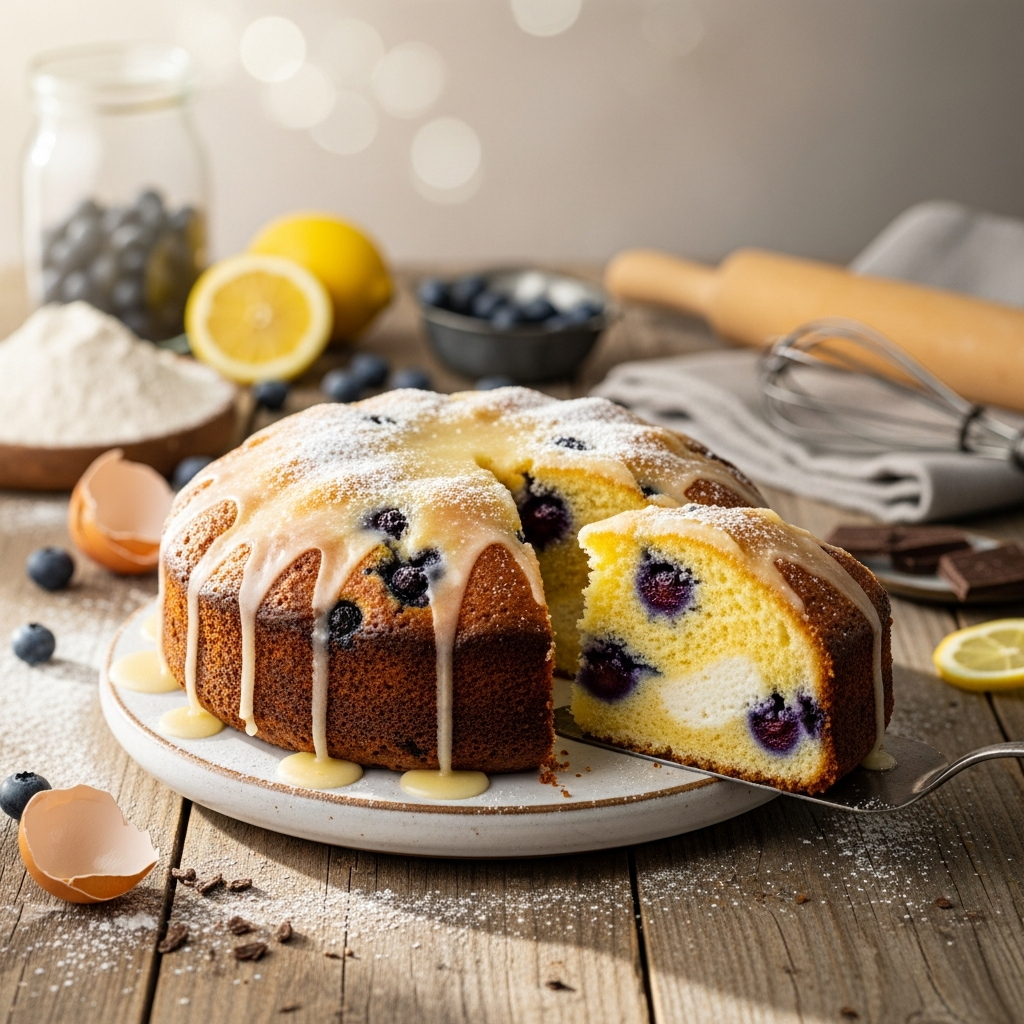
The Ultimate Lemon Blueberry Ricotta Cake: Unbelievably Moist & Easy
Estimated reading time: 7 minutes | Prep time: 20 minutes | Total time: 1 hour 35 minutes
Key Takeaways
- Incredibly Moist & Tender: This cake boasts a uniquely soft and tender crumb, thanks to the addition of full-fat ricotta cheese which provides unmatched moisture and richness.
- Bright, Balanced Flavors: A perfect harmony of sweet, juicy blueberries and zesty, bright lemon creates a refreshing and elegant flavor profile that isn’t overly sweet.
- Beginner-Friendly Recipe: Despite its sophisticated taste, this is a simple recipe to follow, making it a perfect family-friendly dessert for bakers of all skill levels.
- Make-Ahead & Freezer-Friendly: This cake stores beautifully and freezes wonderfully, making it an ideal choice for preparing ahead of holidays, parties, or special occasions.
Table of Contents
Why You’ll Love This Blueberry Ricotta Cake Recipe
Welcome to what is sure to become your new favorite dessert! This homemade Blueberry Ricotta Cake is the perfect blend of rustic Italian charm and bright, fresh flavors. The magic lies in the ricotta cheese, which transforms the batter into something extraordinary, creating a cake that is exceptionally moist, tender, and light. Unlike denser cakes, this one has a wonderfully soft crumb that practically melts in your mouth, making it an elegant yet simple recipe for any occasion.
Every bite is bursting with juicy blueberries and the vibrant, zesty aroma of fresh lemons. It’s a sophisticated yet incredibly easy dessert that works just as well for a weekend brunch as it does for an after-dinner treat. Whether you’re a seasoned baker or just starting your journey, this recipe is designed to be foolproof, guiding you to a perfect bake every time. Get ready to impress your family and friends with a stunning cake that tastes like it came from a high-end bakery, but was made with love, right from scratch in your own kitchen.
Ingredients You’ll Need
Using high-quality, room-temperature ingredients is the secret to achieving the perfect texture in this Blueberry Ricotta Cake. Here’s exactly what you’ll need:
For the Cake Batter
- All-Purpose Flour: 1 1/2 cups (180g), plus 1 tablespoon for coating the blueberries. This provides the main structure for the cake.
- Baking Powder: 2 teaspoons. The primary leavening agent that helps the cake rise and become light.
- Fine Sea Salt: 1/2 teaspoon. Balances the sweetness and enhances all the other flavors.
- Unsalted Butter: 1/2 cup (113g), softened to room temperature. Creaming it with sugar creates air pockets for a fluffy texture.
- Granulated Sugar: 1 cup (200g). Provides sweetness, moisture, and structure.
- Large Eggs: 3, at room temperature. They bind the ingredients and add richness and structure.
- Full-Fat Whole Milk Ricotta Cheese: 1 cup (240g), at room temperature. The star ingredient for a super moist, tender crumb. Do not use skim or low-fat.
- Pure Vanilla Extract: 1 teaspoon. Adds a layer of warm, aromatic flavor.
- Large Lemons: 2, for 1 tablespoon of fresh zest and 2 tablespoons of fresh juice. The zest provides fragrant oils and the juice adds a bright, tangy flavor.
- Fresh Blueberries: 1 1/2 cups (220g). Frozen can be used in a pinch (see FAQ).
- Powdered Sugar: Optional, for dusting the top before serving.
Equipment Needed
- 9-inch (23cm) round cake pan
- Parchment paper
- Large and medium mixing bowls
- Electric hand mixer or a stand mixer
- Rubber spatula
- Citrus zester or microplane
- Wire cooling rack
Step-by-Step Instructions
Follow these simple steps from scratch to create a flawless lemon and blueberry ricotta cake.
- Step 1: Preheat and Prep Your Pan. First, position a rack in the center of your oven and preheat to 350°F (175°C). Grease a 9-inch round cake pan with butter or non-stick spray. Line the bottom with a circle of parchment paper to ensure the cake comes out cleanly.
- Step 2: Combine Dry Ingredients. In a medium bowl, whisk together the 1 1/2 cups of all-purpose flour, baking powder, and fine sea salt. Whisking is important as it aerates the flour and evenly distributes the baking powder and salt. Set aside.
- Step 3: Cream Butter and Sugar. In a large mixing bowl, using an electric hand mixer or a stand mixer with the paddle attachment, beat the softened butter and granulated sugar on medium-high speed for 3–4 minutes. The mixture should become very light, pale, and fluffy. This step incorporates air, which is key for a light cake.
- Step 4: Add Wet Ingredients. Add the room-temperature eggs one at a time, beating well after each addition until fully combined. Scrape down the sides and bottom of the bowl with a rubber spatula as needed. Next, beat in the ricotta cheese, vanilla extract, lemon zest, and fresh lemon juice until just combined. The batter may look slightly curdled at this stage; this is completely normal.
- Step 5: Combine Wet and Dry Mixtures. Reduce the mixer speed to low and add the dry ingredient mixture in three separate additions, mixing only until the last streaks of flour have disappeared. Be very careful not to overmix, as this can lead to a dense cake.
- Step 6: Fold in the Blueberries. In a small, separate bowl, gently toss the fresh blueberries with the remaining 1 tablespoon of flour. This light coating is a classic trick to prevent them from sinking to the bottom of the cake. Gently fold the flour-coated blueberries into the batter using a rubber spatula.
- Step 7: Bake to Perfection. Pour the batter into your prepared cake pan and spread it into an even layer with your spatula. Bake for 45–55 minutes, or until the top is a beautiful golden brown and a wooden skewer inserted into the center comes out clean or with a few moist crumbs attached.
- Step 8: Cool and Serve. Let the cake cool in the pan on a wire rack for about 15–20 minutes. Then, carefully run a thin knife around the edges of the pan to loosen it. Invert the cake onto the wire rack, peel off the parchment paper, and let it cool completely. Dust with powdered sugar just before slicing and serving.
Watch: How to Make It

Baking Tips, Variations & Substitutions
Pro Tips for the Perfect Blueberry Ricotta Cake
- Use Room Temperature Ingredients: This is non-negotiable for a smooth, uniform batter. Room temperature butter, eggs, and ricotta emulsify together seamlessly, creating air pockets that result in a lighter, fluffier cake crumb. Cold ingredients can cause the batter to curdle and become dense.
- Choose Full-Fat Ricotta: For the richest flavor and most moist texture, always select full-fat, whole milk ricotta cheese. Low-fat or skim versions have higher water content, which can make your cake watery and less flavorful.
- Don’t Overmix the Batter: The number one rule for a tender cake! Once you add the flour, mix on the lowest speed possible and stop as soon as the flour is just incorporated. Overmixing develops gluten, which will make your cake tough and rubbery instead of soft.
- Toss Berries in Flour: Don’t skip the step of tossing blueberries in flour. The flour absorbs excess moisture and helps the berries “grip” the batter, preventing them all from sinking to the bottom during baking.
Easy Variations You Can Try
- Add a Lemon Glaze: For an extra pop of citrus, whisk together 1 cup of powdered sugar with 2-3 tablespoons of fresh lemon juice to create a simple glaze. Drizzle it over the cooled cake.
- Swap the Berries: This cake is wonderful with other berries. Try using fresh raspberries, chopped strawberries, or blackberries instead of blueberries.
- Add Almond Extract: For a classic Italian flavor combination, add 1/2 teaspoon of almond extract along with the vanilla extract. It pairs beautifully with the lemon and blueberries.
- Make it Gluten-Free: You can substitute the all-purpose flour with a high-quality 1-to-1 gluten-free baking flour blend that contains xanthan gum.
How to Serve & Store Your Blueberry Ricotta Cake
This cake is delightful served warm from the oven or at room temperature. For a simple, elegant presentation, a generous dusting of powdered sugar is all it needs. To elevate it further, serve a slice with a dollop of fresh whipped cream, a scoop of vanilla bean ice cream, or even some extra lemon curd on the side.
To store leftovers, cover the cake tightly with plastic wrap or place it in an airtight container. It will stay fresh and moist at room temperature for up to 2 days. For longer storage, you can refrigerate it for up to 5 days. For the best taste and texture, allow refrigerated slices to come back to room temperature for about 20-30 minutes before serving. If you loved this recipe, you should try our classic Lemon Drizzle Loaf next!
Frequently Asked Questions
Can I use frozen blueberries instead of fresh?
Yes, absolutely! Do not thaw the frozen blueberries before using them, as this will release excess juice and stain the batter purple. Toss the frozen berries in the tablespoon of flour just as you would with fresh ones, then gently fold them into the batter. You may need to add 5–7 minutes to the total baking time.
Can I freeze this Blueberry Ricotta Cake?
This cake freezes wonderfully. Allow it to cool completely first. You can freeze the entire cake or individual slices. Wrap it tightly in a double layer of plastic wrap, followed by a layer of aluminum foil to prevent freezer burn. It can be frozen for up to 3 months. Thaw it overnight in the refrigerator or on the counter for a few hours before serving.
Can I reduce the amount of sugar in the recipe?
While you can reduce the sugar slightly, keep in mind that sugar provides more than just sweetness—it’s crucial for moisture and structure. For the best results, we don’t recommend reducing it by more than 1/4 cup (50g). Reducing it further may result in a drier, less tender, and less flavorful cake.
Why did my cake turn out dense?
The most common cause of a dense cake is overmixing the batter after the flour has been added. This overworks the gluten, resulting in a tough, rubbery texture. Mix on low speed and stop as soon as the flour is incorporated. Another culprit could be using cold ingredients, which don’t emulsify properly.