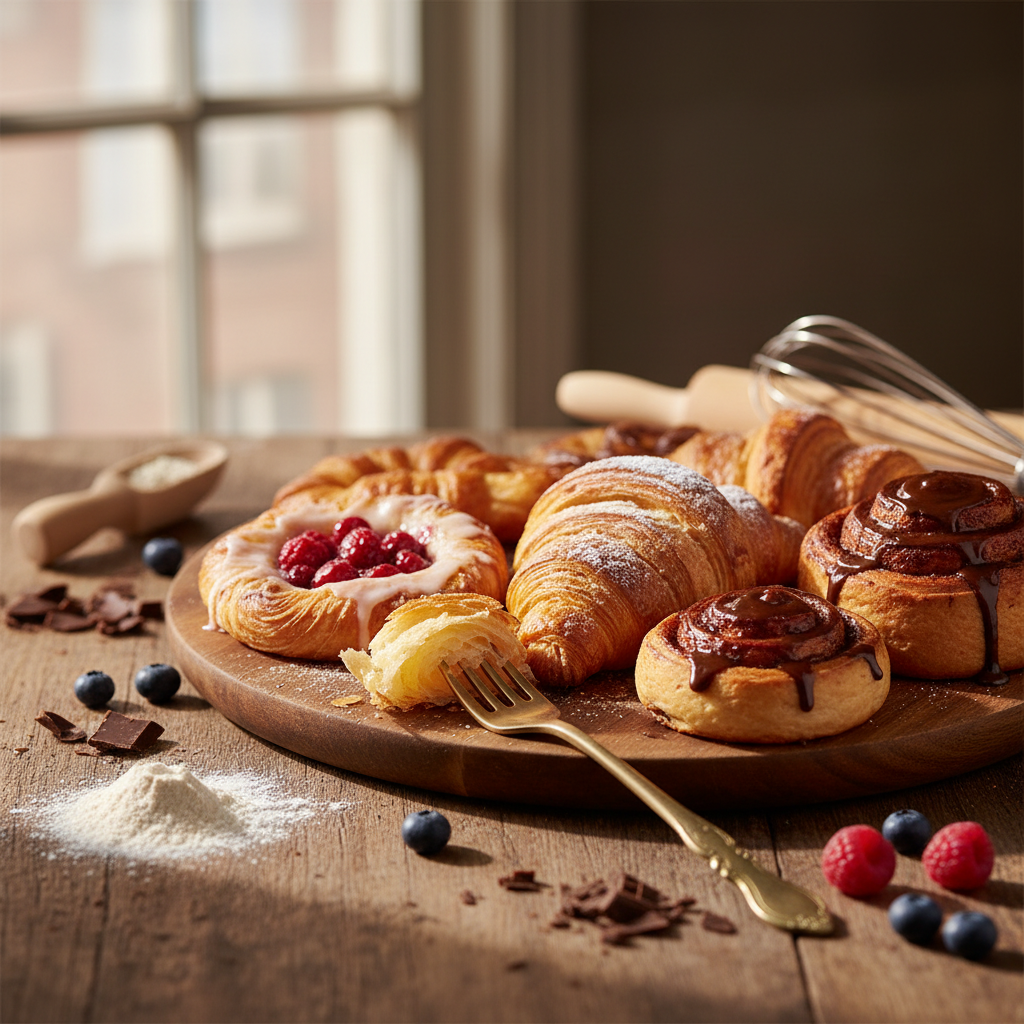
The Ultimate Guide to Mastering Dessert Recipes, Baking, Sweets, Cakes, Cookies, Pastry, and Homemade Desserts
~ 8 min read
Key Takeaways for Sweet Success:
- Mastering baking requires understanding the science behind ingredients and their precise interactions.
- Precision in measuring (weighing is best), correct ingredient temperatures, and avoiding overmixing are critical for bakery-quality results.
- Familiarize yourself with essential tools and techniques like creaming, folding, and tempering to elevate your bakes.
- Myrecipee.com offers meticulously tested recipes and comprehensive guides to empower home bakers to achieve delicious outcomes.
Table of Contents
- 1. The Sweet Science: Understanding Ingredients and Their Transformations
- 2. Essential Tools and Techniques for Bakery-Quality Results
- 3. Common Baking Mistakes and How to Fix Them
- 4. Variations and Flavor Pairings for Your Dessert Recipes
- 5. MyRecipee.com: Your Ultimate Destination for Sweet Success
- 6. Keys to Success: Your Baker’s Checklist
- 7. Get Ready to Bake!
Few things evoke pure joy like the aroma of freshly baked goods wafting from the oven. That golden-brown crust on a loaf of bread, the perfectly chewy edge of a chocolate chip cookie, or the ethereal lightness of a sponge cake – these are the moments that transform an ordinary day into something truly special. For many, baking is more than just a hobby; it’s a passion, a creative outlet, and sometimes, even a path to a thriving business, much like the inspiring story of a former professional ballerina who channeled her discipline and love for creating into a successful baking venture. This journey from simple curiosity to culinary mastery is one we at myrecipee.com understand and celebrate.
If you’re ready to elevate your dessert recipes, baking, sweets, cakes, cookies, pastry, and homemade desserts to bakery-quality standards, you’ve come to the right place. This deep-dive guide will unlock the secrets to consistent success, demystifying the science behind your favorite treats and arming you with fail-proof techniques. We’re not just sharing recipes; we’re empowering you to understand why they work, so you can bake with confidence, precision, and pure joy.
The magic of baking truly begins when passion meets precision. From classic comforts to modern marvels, the world of sweets is vast and exciting. Whether you dream of crafting towering layer cakes, delicate French macarons, or simply the perfect batch of chewy cookies, understanding the fundamentals is your first step. At myrecipee.com, we believe every home baker deserves access to reliable, tested, and utterly delicious dessert recipes, and we’re here to guide you through every whisk and fold.
The Sweet Science: Understanding Ingredients and Their Transformations
Baking is often described as a science, and for good reason. Every ingredient plays a crucial role, interacting with others under specific conditions to create the desired texture, flavor, and appearance. Understanding these interactions is key to mastering any dessert recipe.
Flour: The Structure Builder
Flour, primarily wheat flour, forms the structural backbone of most baked goods. Its protein content dictates gluten development.
- All-Purpose Flour: A versatile choice, offering a balance of protein for good structure without being too tough. Ideal for most cookies, muffins, and quick breads.
- Cake Flour: Lower in protein, resulting in less gluten development. This creates a tender, delicate crumb, perfect for sponges and angel food cakes.
- Bread Flour: Higher in protein, leading to strong gluten formation. Essential for chewy textures in artisan breads and some enriched pastries, though less common in sweet desserts unless a very chewy base is desired.
Chef Tip: “A professional pastry chef advises: ‘For light and airy cakes, always sift your flour. It aerates the flour, removes lumps, and ensures it’s evenly distributed, preventing dense spots in your final cake.'”
Fats: The Tenderizers and Flavor Carriers
Fats – butter, oil, shortening – are paramount for tenderness, moisture, and richness. They shorten gluten strands (hence “shortening”), preventing toughness and adding a luxurious mouthfeel.
- Butter: Offers unparalleled flavor and contributes to a crisp crust and tender interior. Its melting point is crucial for laminated pastries.
- Oil: Keeps baked goods moist for longer and results in a softer, more even crumb. It’s often used in quick breads and some cakes where a lighter texture is desired.
- Shortening: A solid fat that contributes to tenderness and flakiness, particularly in pie crusts and some cookies, without imparting much flavor.
Sugar: The Sweetener, Tenderizer, and Browning Agent
Beyond sweetness, sugar plays multiple roles:
- Moisture Retention: It attracts and holds water, keeping baked goods moist.
- Tenderizer: It interferes with gluten development, making products softer.
- Leavening Aid: When creamed with fat, it creates air pockets, aiding in rise.
- Browning (Maillard Reaction & Caramelization): Sugar provides the necessary compounds for delicious golden-brown crusts.
Leavening Agents: The Rise Makers
These are the unsung heroes responsible for airy textures.
- Baking Soda: An alkaline compound that needs an acid (like buttermilk, yogurt, or lemon juice) to react and produce carbon dioxide gas, causing rise.
- Baking Powder: A complete leavener, containing both an acid and a base, plus a starch. It reacts once when wet and again with heat, providing a steady rise.
- Yeast: A living organism that feeds on sugars and produces carbon dioxide and alcohol, used in breads, doughnuts, and certain enriched pastries for a distinctive fermented flavor and airy texture.
Food science dictates that: “The precise balance between leavening agents and acidic ingredients is critical. Too much of either can result in a soapy taste or a collapsed structure. Always measure carefully!”
Eggs: The Emulsifiers, Binders, and Structure Providers
Eggs are incredibly versatile:
- Structure: Their proteins coagulate when heated, providing structure.
- Leavening: Whipped eggs incorporate air, adding lightness (e.g., meringues, soufflés).
- Moisture and Flavor: Yolks add richness and color.
- Emulsification: Lecithin in yolks helps bind fats and liquids, creating smooth batters.
Essential Tools and Techniques for Bakery-Quality Results
Achieving professional results at home isn’t about fancy equipment; it’s about understanding how to use your basic tools effectively and mastering fundamental techniques. Myrecipee.com recipes are designed with the home baker in mind, guiding you step-by-step.
The Power of Precision: Weighing vs. Measuring
While cup measures are convenient, weighing ingredients in grams is the gold standard for accuracy. This is especially true for flour, where a cup measure can vary wildly depending on how it’s scooped. Precision reduces variability, leading to consistent, reliable results every time – a cornerstone of myrecipee.com’s commitment to kitchen success.
Key Baking Techniques Summarized
- Mise en Place: “Everything in its place.” Have all ingredients measured, prepped, and tools ready before you begin. This eliminates stress and prevents mistakes.
- Creaming: Beating fat (like butter) and sugar together until light and fluffy. This process incorporates air, essential for lift in cakes and cookies.
- Folding: A gentle technique used to combine delicate mixtures (like whipped egg whites or cream) into heavier batters, preserving air and maintaining lightness.
- Laminating: The process of repeatedly folding butter into dough to create thin layers, resulting in flaky pastries like croissants.
- Tempering: Gently heating and cooling chocolate to stabilize its crystals, resulting in a shiny, snap-able finish. For eggs, it involves slowly adding hot liquid to cold eggs to prevent curdling.
Comparison Table: Understanding Common Baking Fats
Choosing the right fat can dramatically alter the texture and flavor of your dessert recipes. Here’s a quick guide:
| Fat Type | Texture/Result | Flavor Profile | Best Use Case |
|---|---|---|---|
| Unsalted Butter | Tender, flaky, rich, crisp crusts | Rich, creamy, dairy notes | Cakes, cookies, pie crusts, pastries, buttercream |
| Vegetable Oil | Moist, soft, even crumb, extends shelf life | Neutral, allows other flavors to shine | Quick breads, oil-based cakes, muffins |
| Solid Shortening | Very tender, high flakiness, stable | Neutral | Pie crusts, some cookies, greasing pans, meringues |
| Coconut Oil | Moist, slightly dense, can be flaky | Distinct coconut (refined is neutral) | Vegan baking, tropical-flavored desserts, healthy alternatives |